
Architecture(s) of Connection
research and experimentation into spatial practice
Can architecture contribute to cultivation of ecological futures and collective well-being? How can we imagine human inhabitation otherwise? Is it possible for spatial practices to facilitate multispecies care, embodied conviviality, and restoration of bonding with the living worlds? How could the built environment play with the established binaries of nature/culture, inside/outside, profane/sacred, human/nature? And if materials are relational entities through which creative practices take tangible shapes, what will be the building blocks of our world-making efforts?
Foresta as a platform for un-disciplinary research, learning and prototyping new ways of multispecies togetherness holds space for collaborations with spatial practitioners to develop ideas, tools, processes and structures that prioritize planetary habitability, well-being and re-enchantment. On this page we share our inquiries, conversations, residencies and learnings from this living lab for post-anthropocentric and multispecies thinking and co-creation.
As a way to begin our research-as-necessity we are contemplating a bigger picture, the wider territorial scales of thought and action, pondering on how a more respectful cohabitation can be real, and what critical perspectives may assist in framing the contemporary architectural practices that promote life, diversity and coexistence. Conversation partners include Alan Organschi, Andrés Jaque, Ann Light, Gilles Clément, Martín Ávila, and others.
In this episode of the video book we slowly move towards more grounded realities and situated contexts within planetary inhabitations, turning our gaze to potentialities for a renewed relationship with the place. Conversation partners include Gerbrand Burger (Thinking Forest Foundation), Jan Boelen (Atelier LUMA), Jelmer Teunissen (Wetland Communisation), Małgorzata Kuciewicz & Simone De Iacobis (Centrala), Setareh Noorani (Nieuwe Instituut), and others.
In this collective reflection we are looking at the ways in which architectural and design practices are paying attention to the questions of inclusion or exclusion of multispecies communities from human spaces, questioning the anthropocentric constitution of architecture. Conversation partners include Thijs de Zeeuw (Nature Optimist), Thomas Hauck (Animal-Aided-Design), Tsukasa Ono (Bacteria Architect), and others.
We are now turning to material practices that suggest ways in which human-planetary relations can be rearticulated, in our efforts to build human spaces in attentive coherence with and within living ecologies. How does a material project become a project of connection? Conversation partners include Anna Heringer, Daniel Bell, Jakob Travnik, Jörg Depta, Lucas De Man, and others.
RESIDENCIES and INTERVENTIONS
Following the above mentioned inquiries we engage into collaborations with spatial practitioners as a path towards researching as well as constructing poetic and built environments for Foresta’s becoming in a place, prioritising circular design principles, plant-based and other regenerative bio-based materials, adopting to the local context, and facilitating multispecies alliances and spaces of affection.
Architecture and Food
Jasmine Parsley intervention
summer 2025
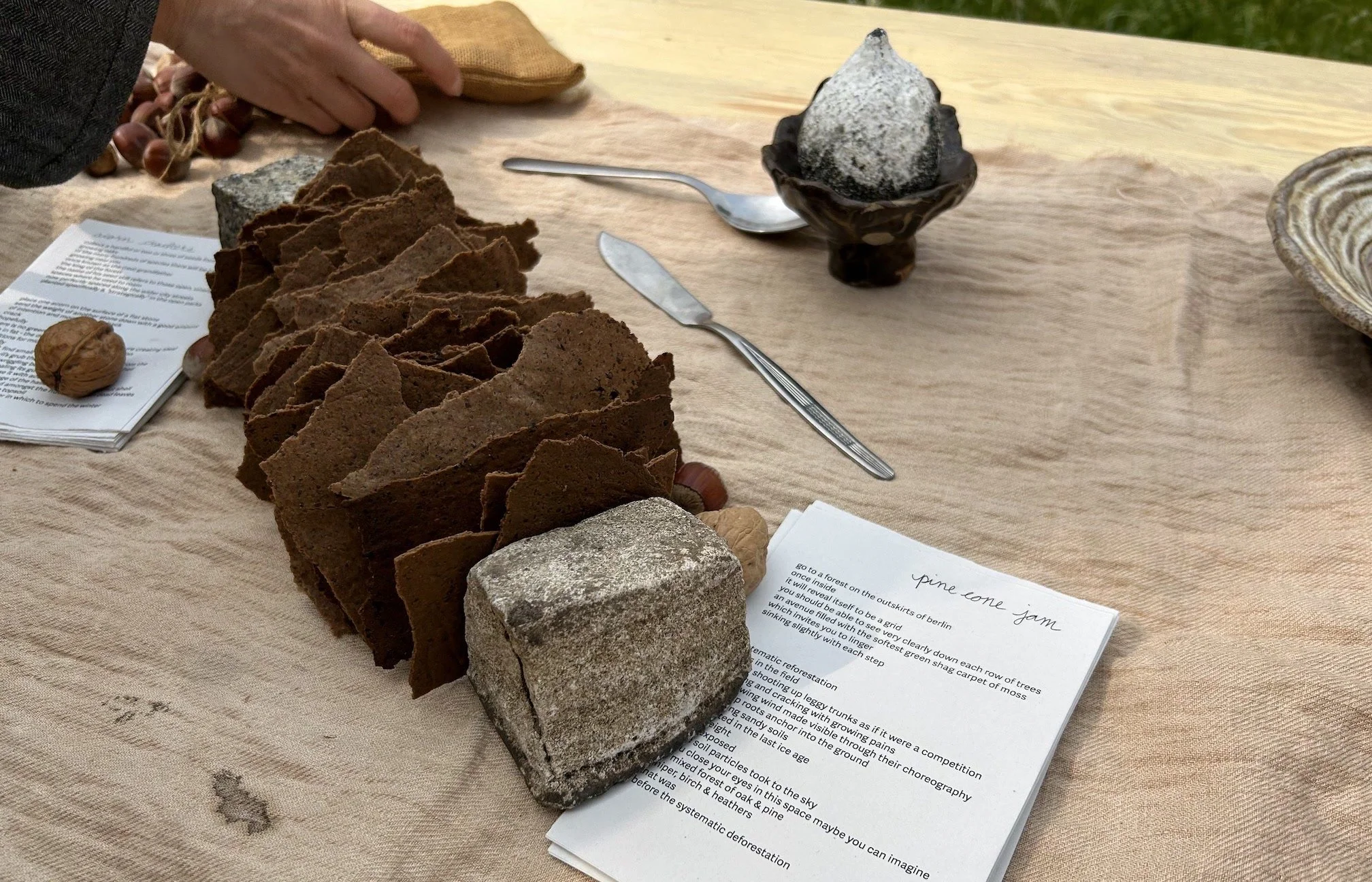
During the opening ritual of open-air screenings of “Architecture(s) of Connection” video book at Bauhaus Earth, we invited food artist and architect Jasmine Parsley to weave a conversation between food and architecture as potentialities for understanding space from new perspectives (including through taste). Together we pondered on contemporary architectural practices that promote life, diversity and coexistence, using food as a medium to connect social and ecological issues.
Architecture in Relation
Studio Inscape residency
spring 2025

During their residency at Foresta Studio Inscape were bringing their experiences with bioregional design, to further experiment with how eco-philosophical theory can translate into practice and how to think the interconnectedness of actors, materials, landscapes and their inhabitants in the context of Foresta, contemplating these questions: What’s the role of an architect within networked thinking of a living ecology? How can architecture be practiced responding to what is already there, in an entangled relation with a place?
Regenerative living practices in rural areas
Alberto Roncelli residency
winter 2025

During his residency Alberto explored potentials of architectural practice to enhance attentive, sustainable, and poetic approaches to habitation, investigating into the significance of building at the intersection of the site's local ecologies, conducting in-depth observations, and beginning to develop some site-specific artefacts that embody ecological and regenerative intentions of Foresta in this place.
Energetic Entanglements
Mascha Fehse residency
winter 2025

Mascha’s residency was a reflection on a relationship with energy and nourishment through the making of a heating and cooking prototype that is not only a tool, but also an experiment, a conversation starter to rethink our entanglements with sustenance. Together we considered the interplay between energy, locality, and the labor of nourishment: what does it mean to adapt to what is around us, to work with what is abundantly available within the systems we create or interfere in, and to imagine practicable and simultaneously imaginative processes of making food.
Place-listening and Idea-seeding
A collective reflection
autumn 2024
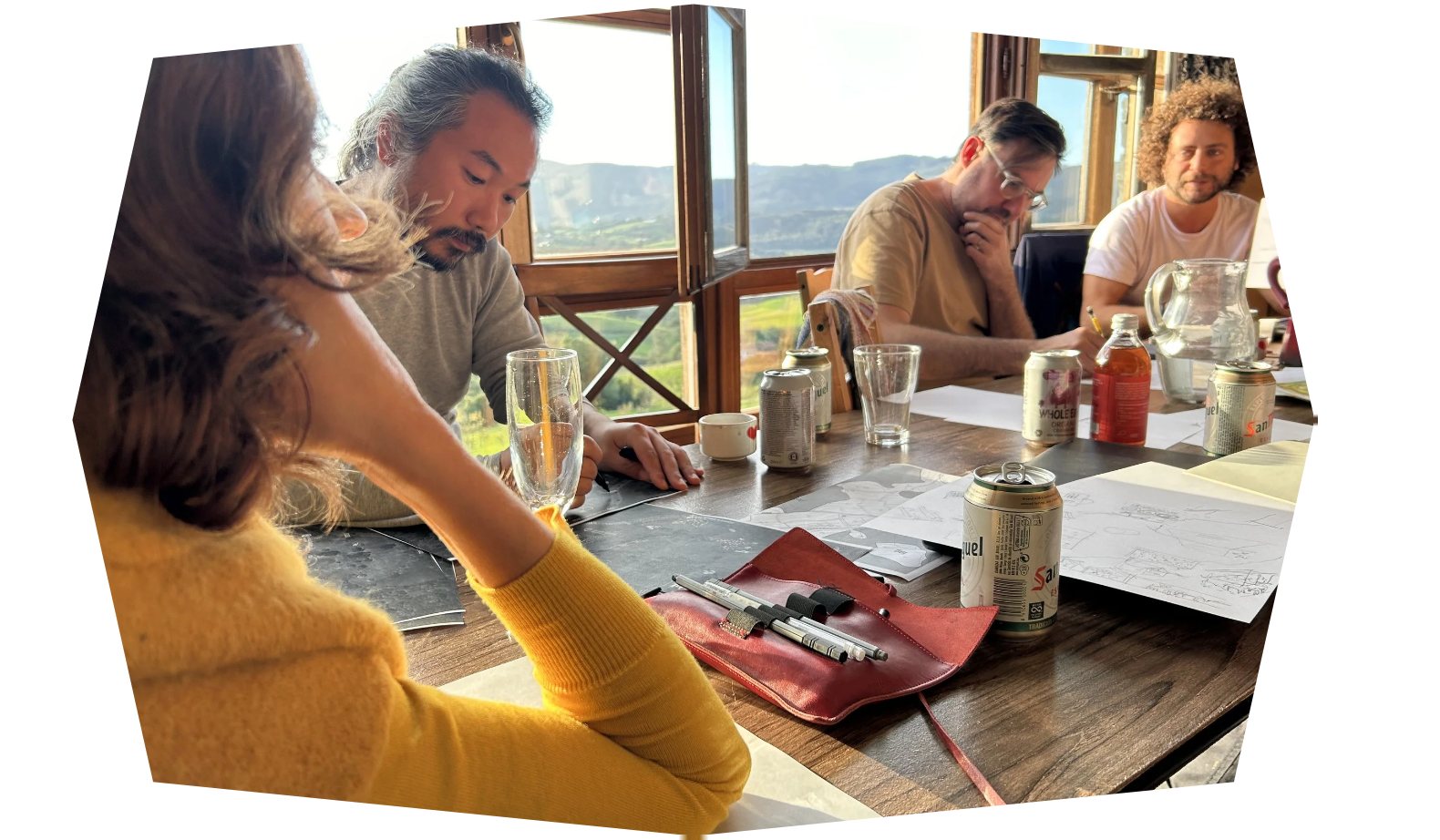
For this informal get-together we’ve invited Je Ahn, Matthew Dalziel, Francesco Lipari, Martial Marquet, and other spatial practitioners to seed some ideas with us for the architectural potential of Foresta’s place in norther Spain. We reflected on possibilities of how ideas for regenerative architecture could unfold as a situated practice and their potentials for making homes (as well as temporary dwelling places) for plants, animals, humans and other life forms.
Agropoetic Pavillion
Atelier Poem commission
autumn 2024
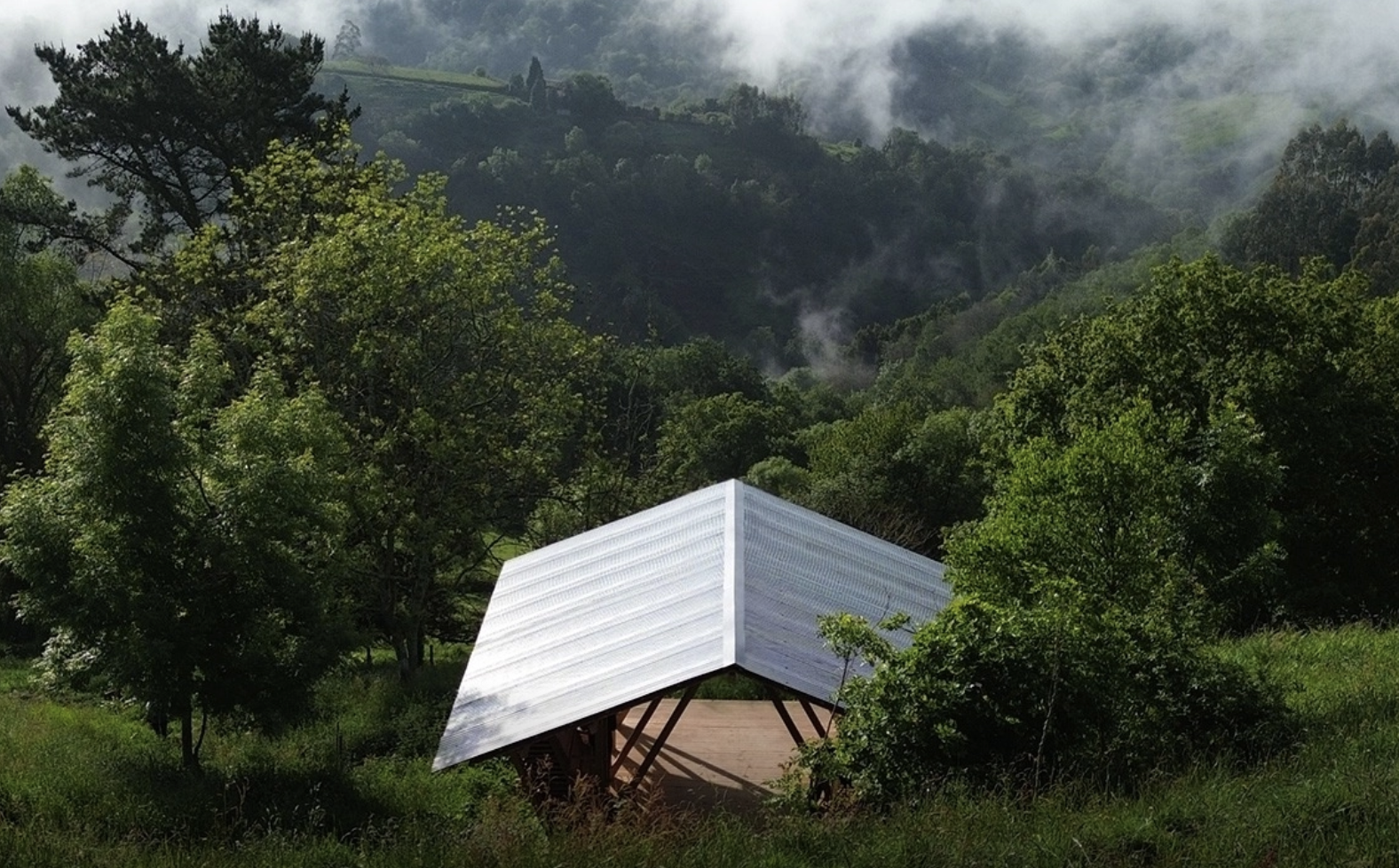
The first physical vessel to hold space for unfurling processes within Foresta’s becoming in a place was commissioned by Foresta Collective, designed by Atelier Poem, and built together as a participatory practice. In words of architects, the structure reinterprets Asturian vernacular architecture and mythologies, reconnecting the cultural link with the landscape through a contemporary lens.
More info:

Thinking with a Garden
residency series

Woods in the Sound
video book / podcast
Acknowledgments
The beginnings of Architecture(s) of Connection research in 2024/2025 were made possible with support of Kalliopeia Foundation
Images: Violeta Lopiz, Foresta Collective, Studio Inscape, Alberto Roncelli, Mascha Fehse, Atelier Poem
Donec id justo non metus auctor commodo ut quis enim. Mauris fringilla dolor vel condimentum imperdiet.