Foresta Food Lab
a space for food-based artistic practice
Vision
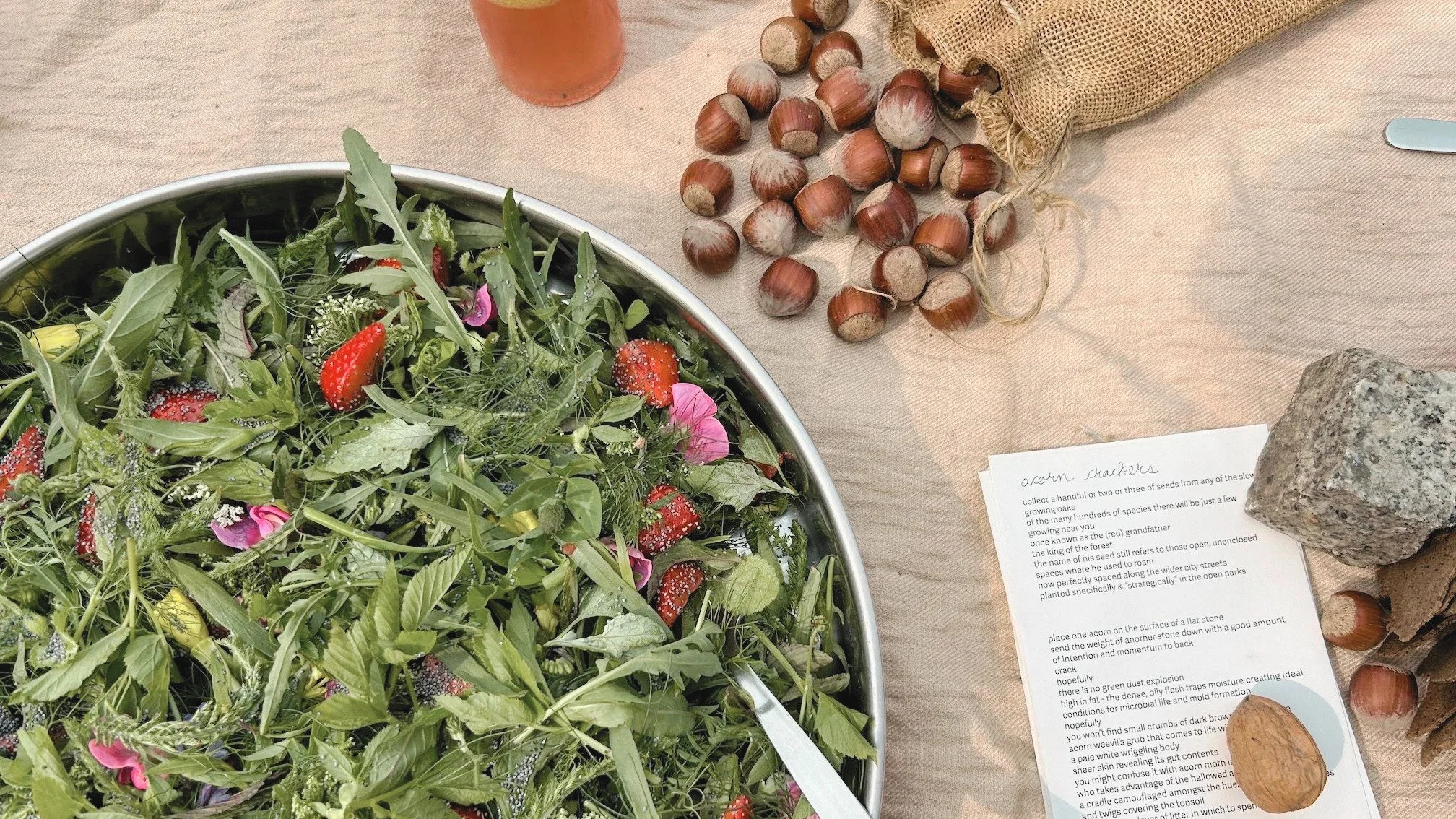
Food has been a long-term research and collaborative practice at Foresta. And food is never ‘only’ food. It is one of the fundamental ways of relating — to soil and seasons, to labour and memory, to ecologies and imagination, to Earth beings and materials that make places possible. Food is nourishment, and also language, ceremony, knowledge, conversation, time, medicine, exchange, responsibility. In the broader Foresta vision we approach food as a portal for world-making, an integral part of our platform for regenerative practice, rooted in attentiveness, care, and collective inquiry.
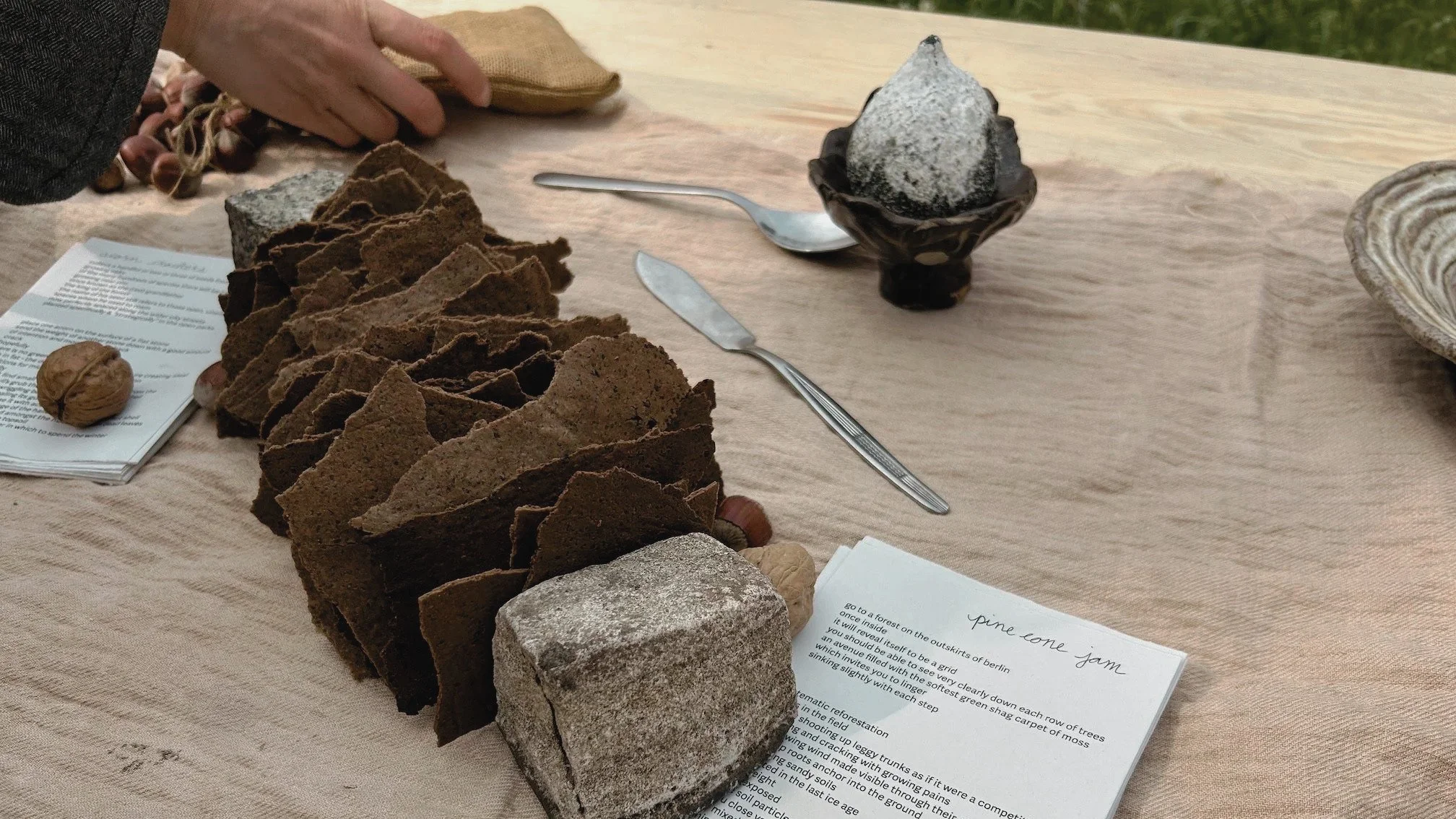
If food is a worlding practice, how do we strengthen regenerative food ecologies? What and who are included into those ecologies? How do we lay sustainable foundations for food sovereignty? How does food as poetry, friendship, memory, energy manifest?
Gradually bringing food back into the centre of our thinking and making, food became not only a cultural and philosophical investigation that was animating us, but a more grounded interest began to sprout — that of implementing regenerative agriculture and food production experimentation at Foresta on the land.
Since 2024 we have been in the presence of 3 ha piece of land in Asturias, northern Spain, with an intention for Foresta to begin growing as a real forest. Thinking tools that accompanied us throughout were mainly offered by the gardens — planetary garden, forest garden, garden of ecological re-story-ation. Lead by inquiries into what potential futures do gardens make possible, and if gardens are expressions of what we are tending and how, could gardens be partners in reimagining human becoming and our work in the world.
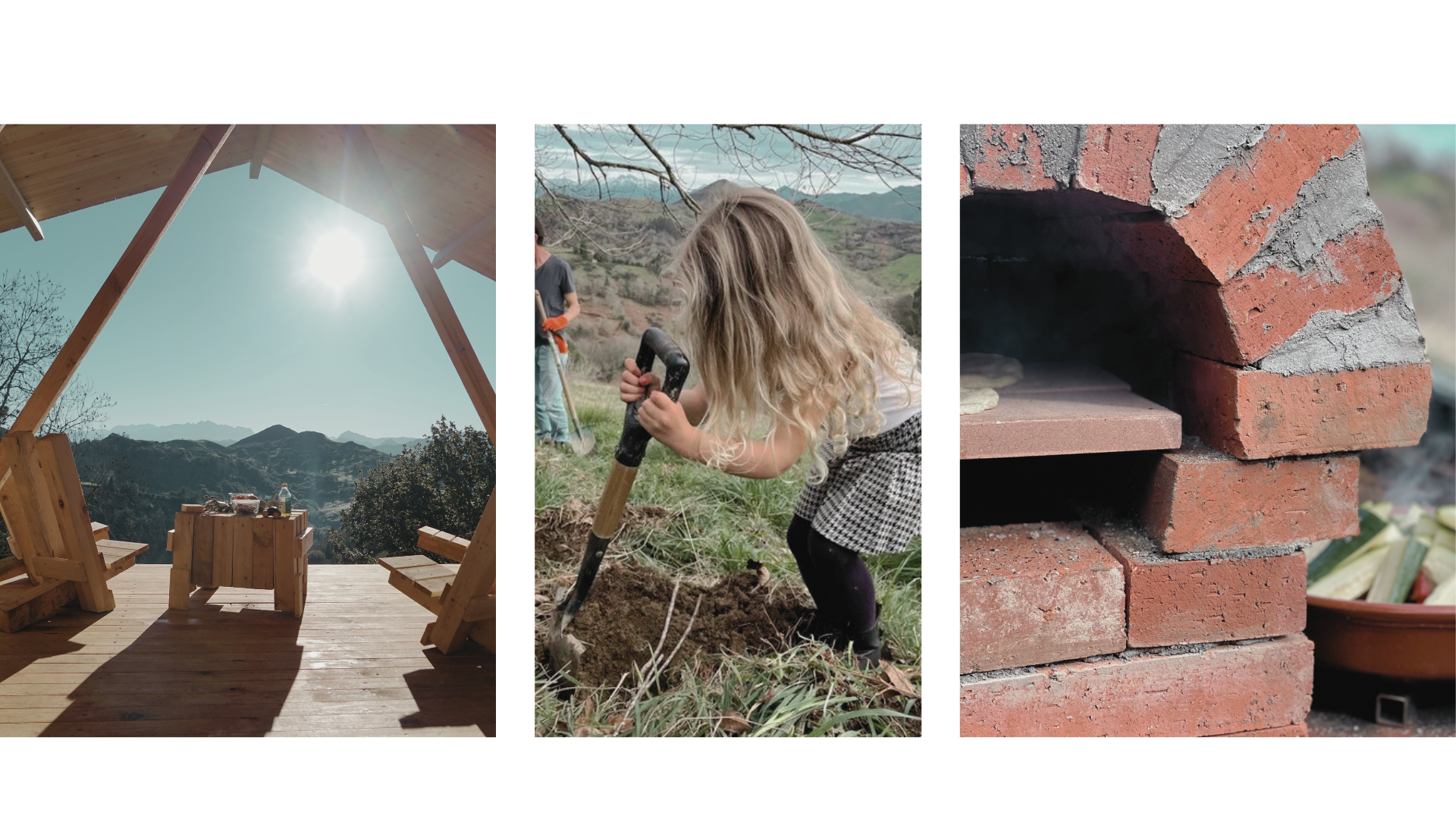
After a few seasons of place listening and idea seeding, we have begun growing a forest garden, an ecosystem of co-liveable edible forest, that is becoming Foresta on the land. So far we have planted a couple of thousands of trees and bushes, made paths and terraces, participated in multispecies processes for soil regeneration, built the first structure on the land, an agropoetic pavilion, and constructed a heating and cooking prototype, aka wood stove and oven.
A garden of many gardens
While thinking and walking with questions like what does this place want to become and what do we wish for it to become through our hopeful practice, gradually we grew to recognize the multitudes of diverse micro-worlds, landscapes, soils, microclimates, that are all part of this land. That this land too is a pluriverse, that it is too a world of many worlds. And so the idea for a garden of many gardens was born, emerging from the experience of getting to know this place closer.
It is thus our wish to offer to different artists and affine practitioners to bring their divergent worlding practices onto the common ground that is Foresta, to plant gardens that could live and evolve beside each other without any need to comply to a spectacle of sameness. It is our wish to invite you to join us in co-shaping the possible at Foresta on the land.
Invitation
The invitation is to engage with Foresta space for regenerative culture(s) as a site of ongoing practice — where food becomes a medium through which relationships are cultivated, observed, and transformed over time. It’s a proposal to root practice in place, to reconnect food, ecology and culture, to participate in the slow collective cultivation of a living system and be cultivated by it.
Foresta garden as a framework for shared research and learning offers a space to ask questions that are at once practical and poetic. Not questions to resolve quickly, but questions to inhabit together, to dwell in over the changing seasons. It invites to join the beginning of a longer trajectory, of returning across seasons, of working with time, growing food from seed and following its cycles, building familiarity with local soils, plants, and microclimates, allowing relationships — ecological, human, multispecies — to deepen gradually.
Residents and collaborators are invited to:
Imagine, plant and tend to their garden
Grow (some of) their ingredients
Develop new formats of culinary, ecological, and social practice
Experiment with ways of togetherness and sharing food
We are interested in practices that engage food as relationship, poetry, medicine, ceremony, memory, friendship. Whether it’s about cooking, foraging, baking, fermentation, gardening, gathering, preservation, transformation, research, storytelling, ritual, hospitality, or forms that might not yet have a name, — what matters is not genre, but attunement. We value sensitivity and listening, reciprocity and openness to let the process be shaped by the land as much as by the artist.
This is not a call to produce outputs. It is a field for presence, exchange, and careful making. A residency here is an opportunity to slow down enough to sense what the place is already doing, what it is asking for, and what forms of nourishment, meaning, or repair might emerge in the process.
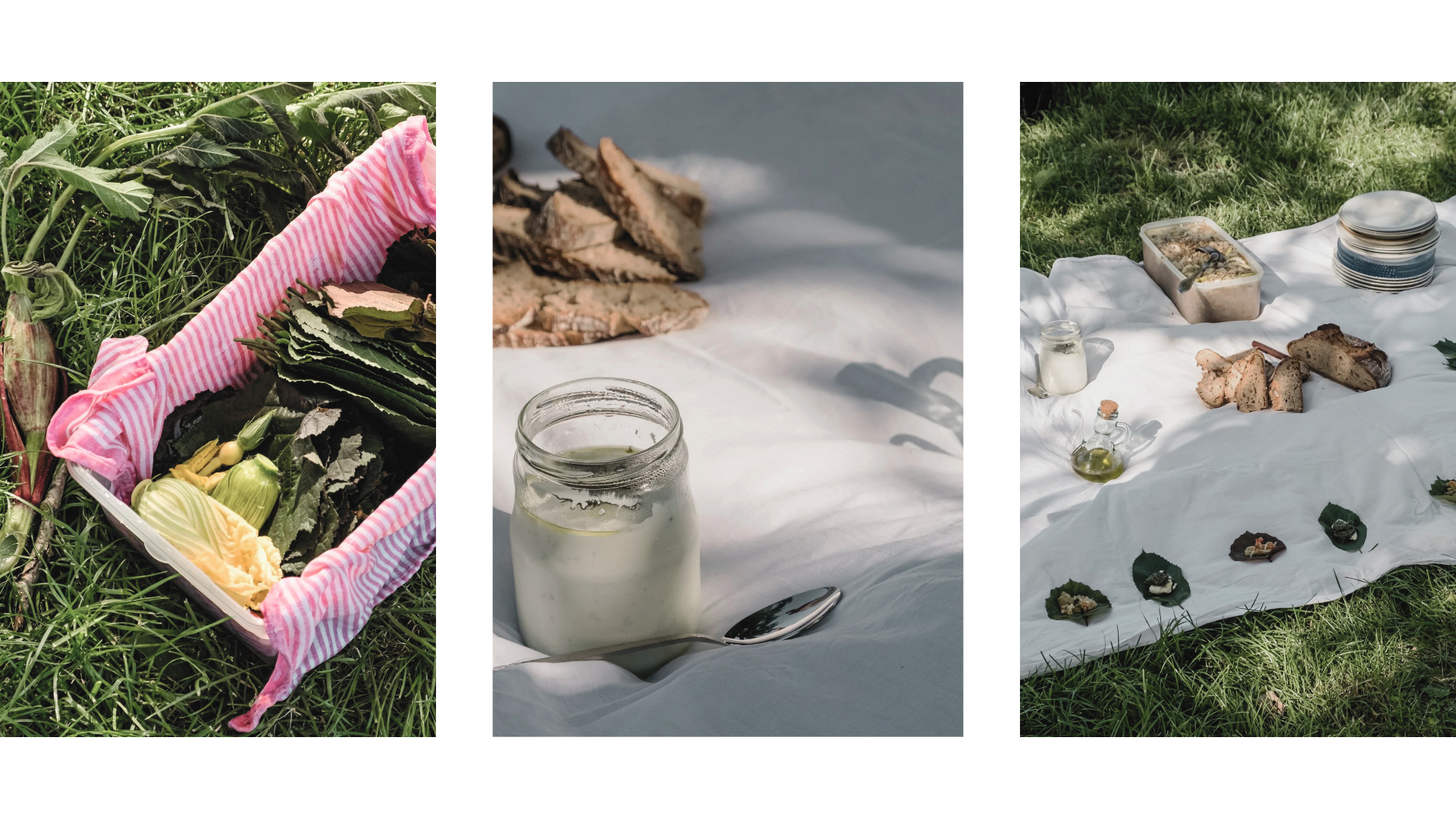
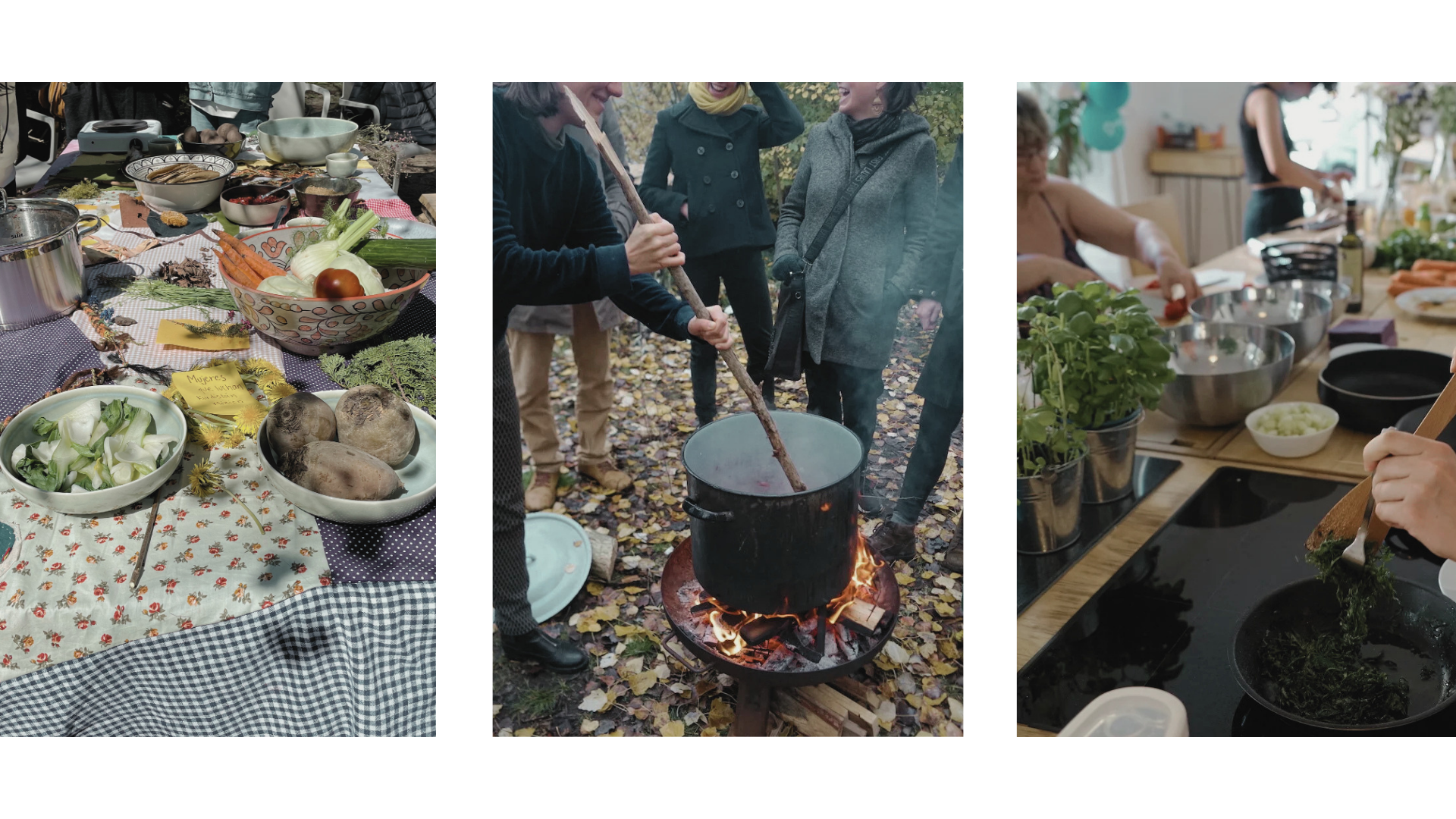
Images: Foresta Collective from
*Architecture(s) of Connection at Bauhaus Earth with Jasmine Parsley
*(Un)mapping Pedagogies at Spore Initiative with Colectivo Suumil Móokt'aan
*Conviviality with plants at Transit.sk with all participants making food together
*Senses Series at Über den Tellerrand with all participants making food together
*Forms of Love at Woods in the City with participants making food together
*Foresta on the land, images of the pavilion, planting sessions, oven and stove
Closing triptych: Eszter Kondor from
Invisible Maps with Dunjiva Kollektiv and Wilde Flora
Donec id justo non metus auctor commodo ut quis enim. Mauris fringilla dolor vel condimentum imperdiet.