

Foresta Collective Association
“Tomorrow
we shall have to think up signs, sketch a landscape, fabricate a plan
on the double page
of day and paper.
Tomorrow, we shall have to invent,
once more,
the reality of this world.”
Octavio Paz
About the association
How do we hold space for complexities of this moment? How could culture engage with the shifting societal landscapes, where outdated systems and ways of thinking pose challenges at different scales? Which delicate strategies could it offer, which new ways of thinking and creative approaches to world-making? How do we collectively support imagining and birthing futures aligned with a culture of listening, collaboration and ecological renewal?
These inquiries, and those that we do not yet know how to formulate, along with the question at the origins of Foresta Collective — “how do we want to live as a multispecies collective?” — root the association in the framework of a Garden of Ecological Re-story-ation. It’s an invitation to gather in a garden, outside of the ruins of “the world” as we knew it, and to listen for what is real now, what wants to live, or to be grown otherwise, or from different seeds altogether. Beside other possible components contained by the Garden as a platform, in the context of the association this framework offers to consider the garden as a shared space for transdisciplinary research, learning, and prototyping new ways of multispecies togetherness. Re-story-ation responds to the deep need for challenging conventional ways of thinking, imagining new narratives that are more life-generative and developing transformative tools and processes that prioritize planetary habitability, well-being and re-enchantment.
The association operates as a platform that hosts, frames, and supports cultural, ecological, and educational practices and carries an intention to bring together affine companions, to move forward joining forces mycorrhizally, to cultivate and slow-grow (with) a place for regenerative culture(s), multispecies commons and symbiotic worlding (i.e. making liveable worlds together). In the future, such a place can potentially become not only a cultural ecosystem and a site for artistic work, but also a habitat for activities that contribute to sustainable cosmo-local economy (agricultural, hospitality- and slow-travel-related, gastronomical, and others).
Place and displacement
While the association’s main location is in Asturias, northern Spain — where the valley, the hills and the mountains on the one side and the ocean landscapes on the other are bearing witness to the development of this international laboratory for spaces of the possible — we are also interested in how such experimental material and cultural practices may be able to resonate across territorial contexts.
The association is therefore also looking to potentially become a distributed garden, connecting with other places (more specifically a territory just outside of Berlin, Germany, and in Bretagne, France, each offering a particular climatic expression and cultural imagination), thus building an intentional distributed geography, where every place is a living node of one shared process.
Areas of attention
Association’s activities, while being diverse and hybrid, are developing within the frame of the following main areas of attention.
Architecture(s) of Connection
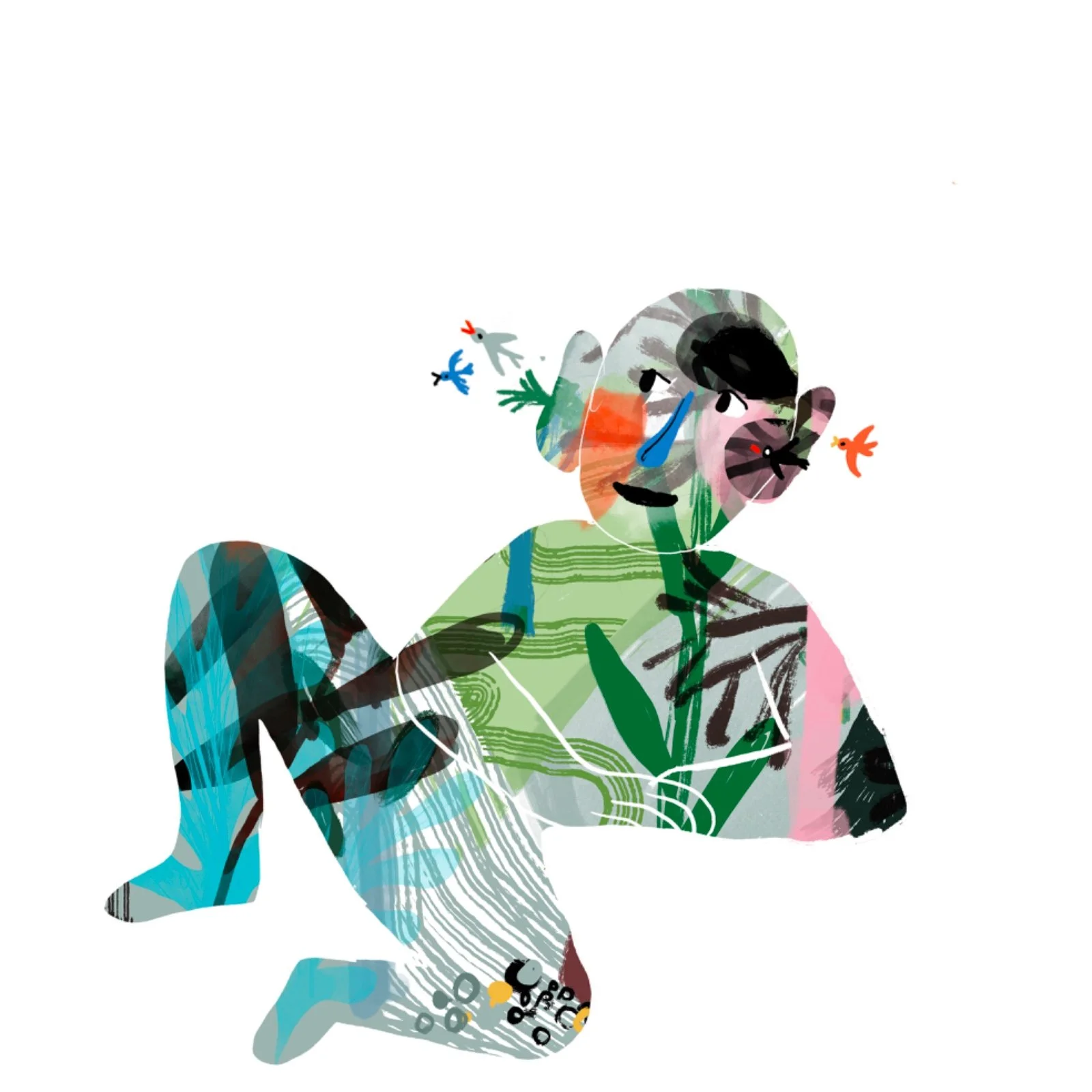
How can architecture support multispecies conviviality and contribute to cultivation of ecological futures? In which ways can it invite us to develop more attentive and complex attitudes toward the vegetal and animal worlds, and frame our process of becoming more sensitive to other–than–human subjectivities? In which forms can regenerative architectures support building with the landscape and can they be a continuation of natural environment embraced by respectful intervention within that takes into account needs of diverse inhabitants? How to imagine and construct low-carbon built environment prioritising circular design principles, plant-based regenerative materials, adopting to the local context, and facilitating more-than-human alliances? These and other inquiries that we have discussed in a video book with a variety of thinkers and practitioners, are what we would like to deepen and develop further within the association’s activities. www.foresta-collective.com/architectures-of-connection
Agroforestry
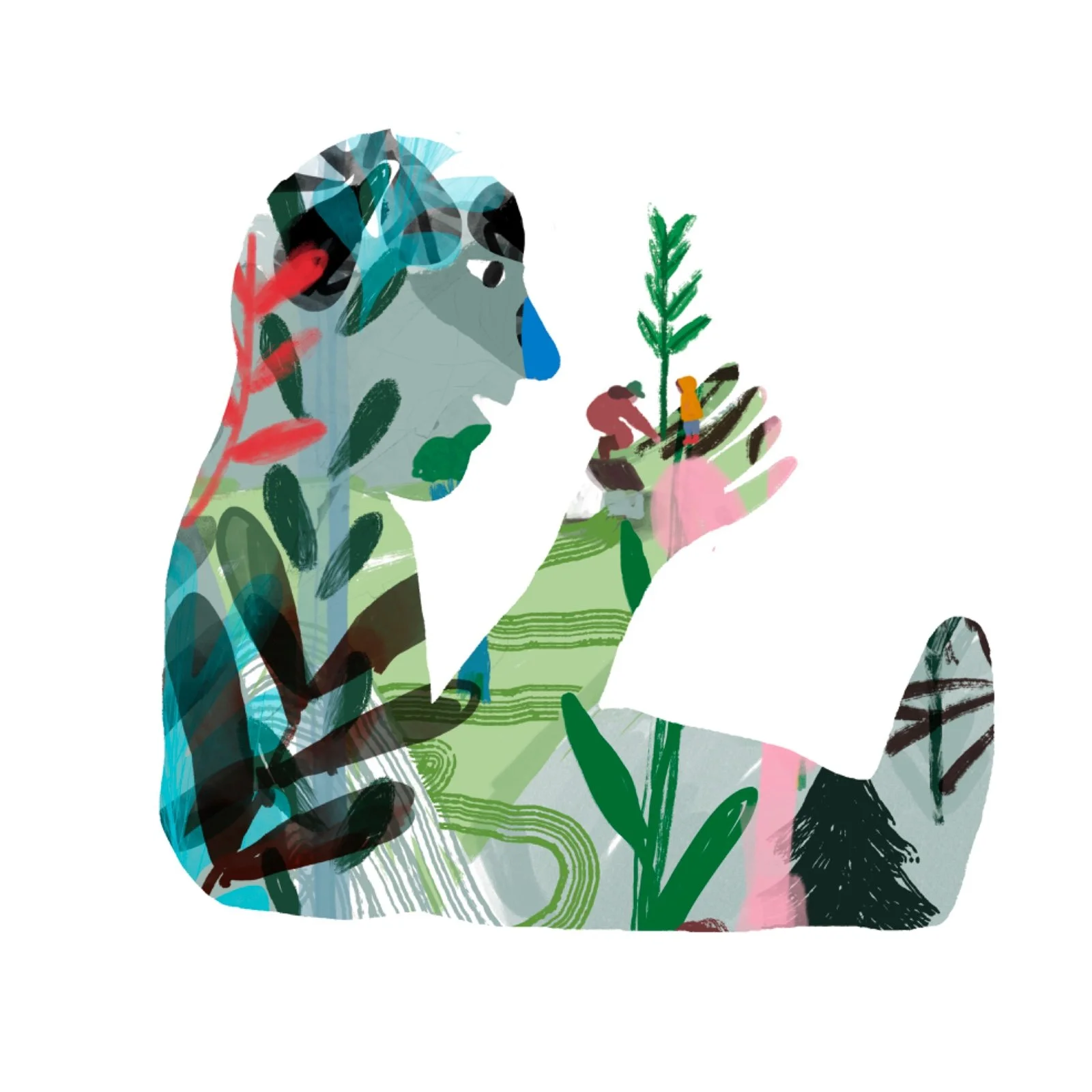
How can agricultural practices cultivate new possibilities for relating to the diverse communities of life and engage into landscape relations in such a way that we can work as part of an ecosystem in harmony with natural processes? In our inquiry into working toward regenerative approaches to land care, cultivating Earth-based wisdom needed for the deep restoration, fostering biodiversity, serving the needs of multispecies inhabitants, we are in continuous apprenticeship from the forests. We are currently in the beginnings of planting a forest garden, putting into practice what we are learning from these complex symbiotic systems: to slow-grow food, as well as habitats for varieties of living beings, to facilitate conditions for biodiversity, to transfer passion for nature, and engage with many other ways in which forest cultures offer frameworks that enable change. www.foresta-collective.com/forest-gardens
Foodscapes
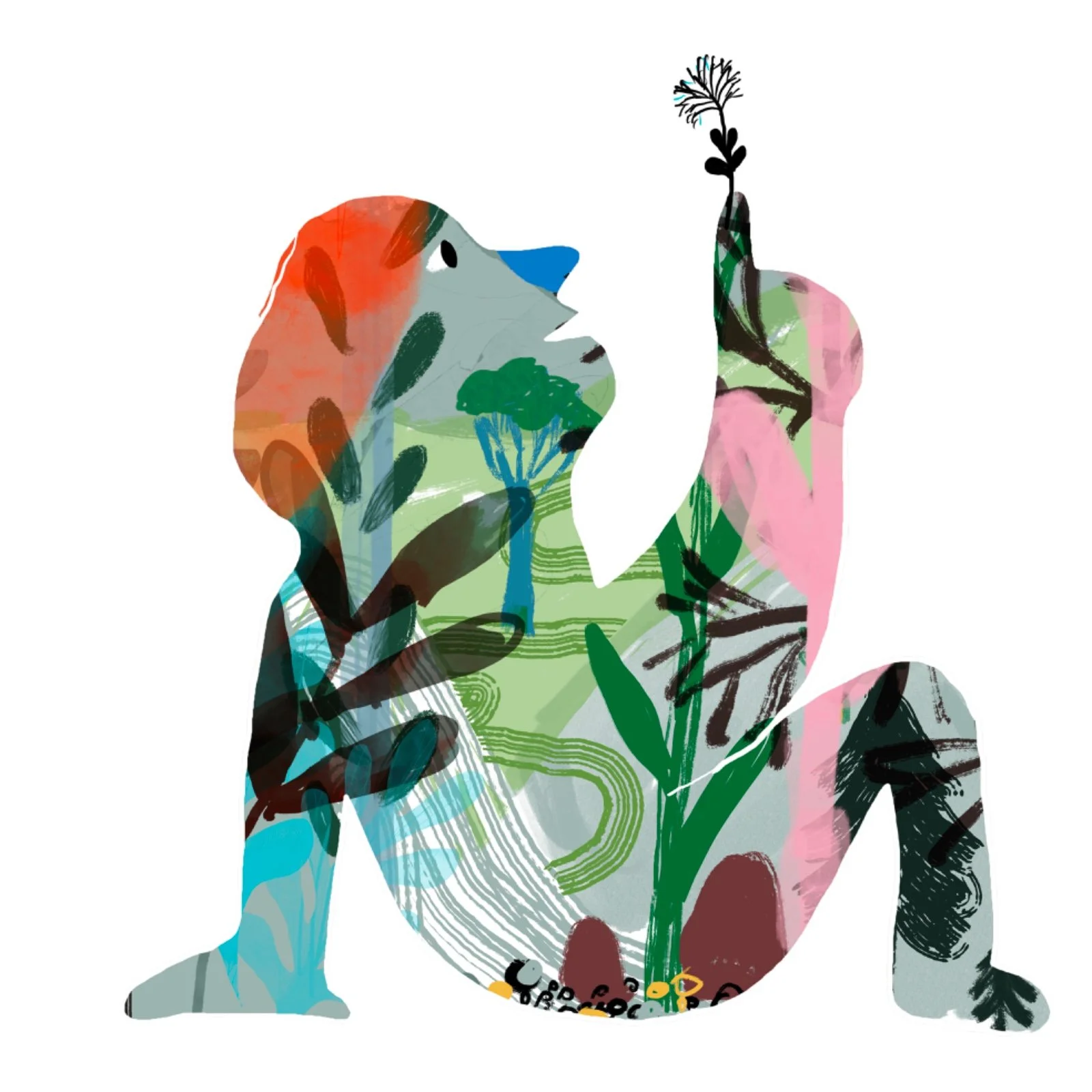
Food is also a portal for world-making, for more grounded convivial multispecies imaginaries towards planetary well-being. So how do we build connections and enact reciprocity with and within foodscapes? What if we bring food back into the centre of our thinking? If food is a world-making practice, how do we strengthen regenerative food ecologies? What and who are included into those ecologies? How to lay the foundations for food sovereignty and what and who are included into the local? And how do we contemplate food also as poetry, friendship, memory, ceremony, energy, medicine? We engage with food as both a cultural investigation as well as a more practical interest to implement regenerative agriculture and food production.
www.foresta-collective.com/foodscapes
Relating to the Living
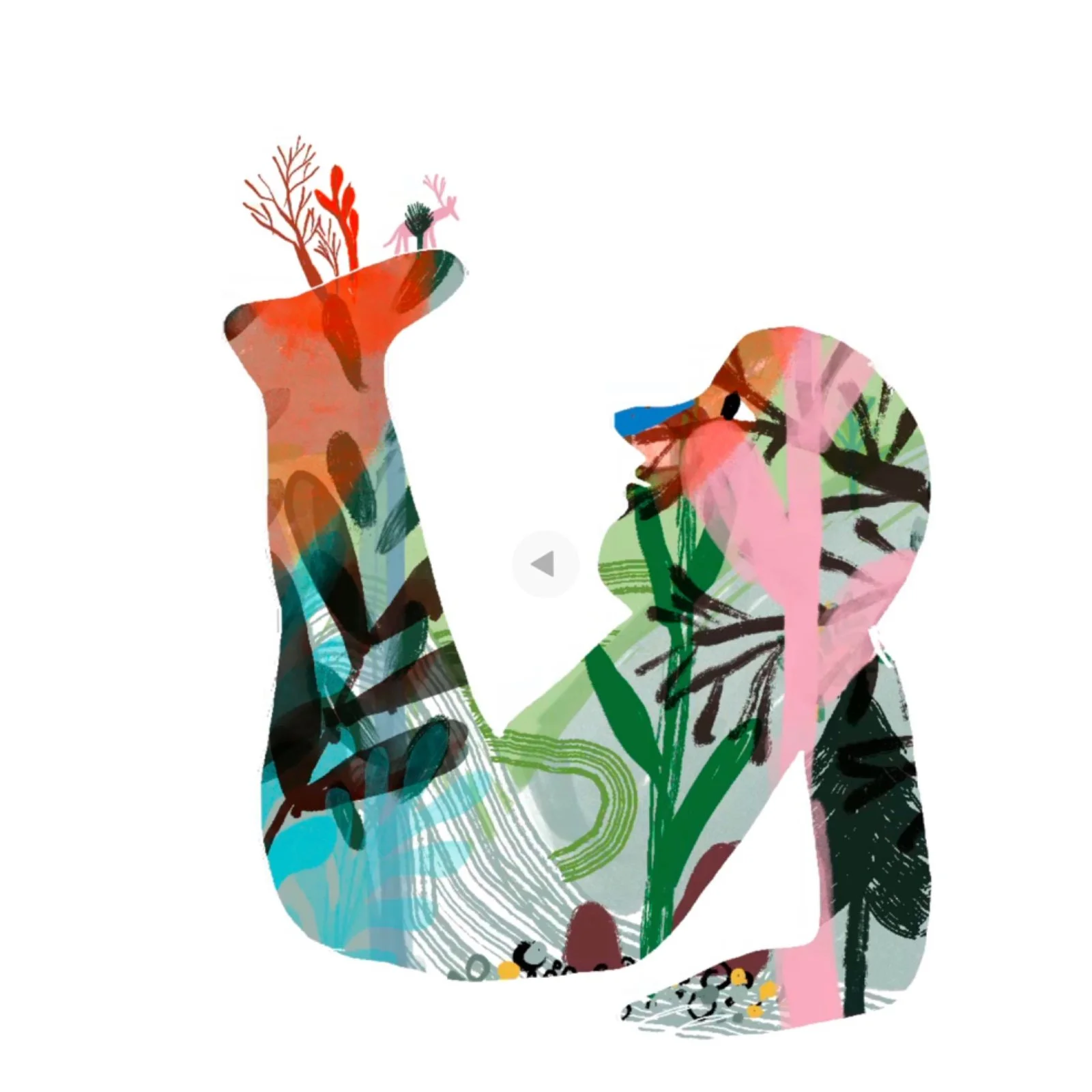
All areas of attention on our horizon, envisioning activities for the association and imagining what a space for regenerative culture(s) could look like and how to make it vibrant, alive and sustainable, both in terms of sustaining diverse communities of life as well as taking care of the economic sustainability and longevity of the project, — unfold within a hopeful practice of multispecies world-making, towards potentialities for more reciprocal relationships of care, generosity, gratitude, symbiotic and sympoietic living, rooted in deconstruction of reductionist ideologies that are projected onto multispecies communities of life and may change our understanding of what it might mean to be human. www.foresta-collective.com/relating-to-the-living
Potential areas of activity
Mentioned below are some of the existing and potential projects and activities that could unfold within the association. Ranging from more mature formats that have been developed by Foresta Collective over several years, such as Seasonal Academy, to prototypes and recent visions. Association could encompass many more activities, to be envisioned and grown from the interests and skills of its members, aligning with its vision and strategic direction. It could also collectively decide to narrow down and focus on something rather than widen.
Research
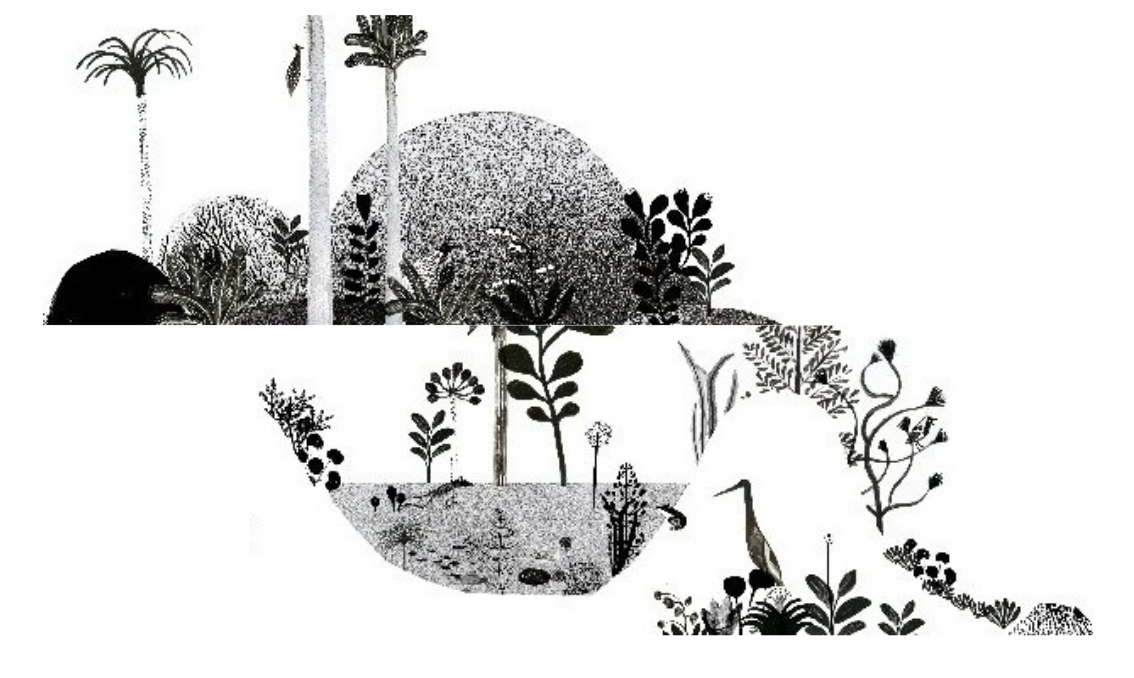
The association offers a platform for experimentation in collective imagination and action, trying to align and craft gestures with the agencies of the Earth. For this researching imaginaries and practices beyond the hegemonic logic may be one of the core activities. How could notion of the planetary become our thinking tool? What may be a culture that relinks to the living? How can we story the world differently and translate it into practice? Who is “we” — who is included in the coming together of diverse human and non-human entities? What is regenerative? Could a true enactment of a culture of care become real, in ways that doesn’t promote mimicry rather than genuine culture? And what the forests of imagination tell about possible futures in times when AI agents act on behalf of humans, meet in social networks and form societies of their own, how will non-organic entities that never rest and cyclical living creatures will share worlds? An aligned togetherness is powerful. Everyone is bringing their own questions, researches and knowledges in the making, and the alchemical workings can take place on a collective level when honest inquiries are shared and pursued.
Residencies
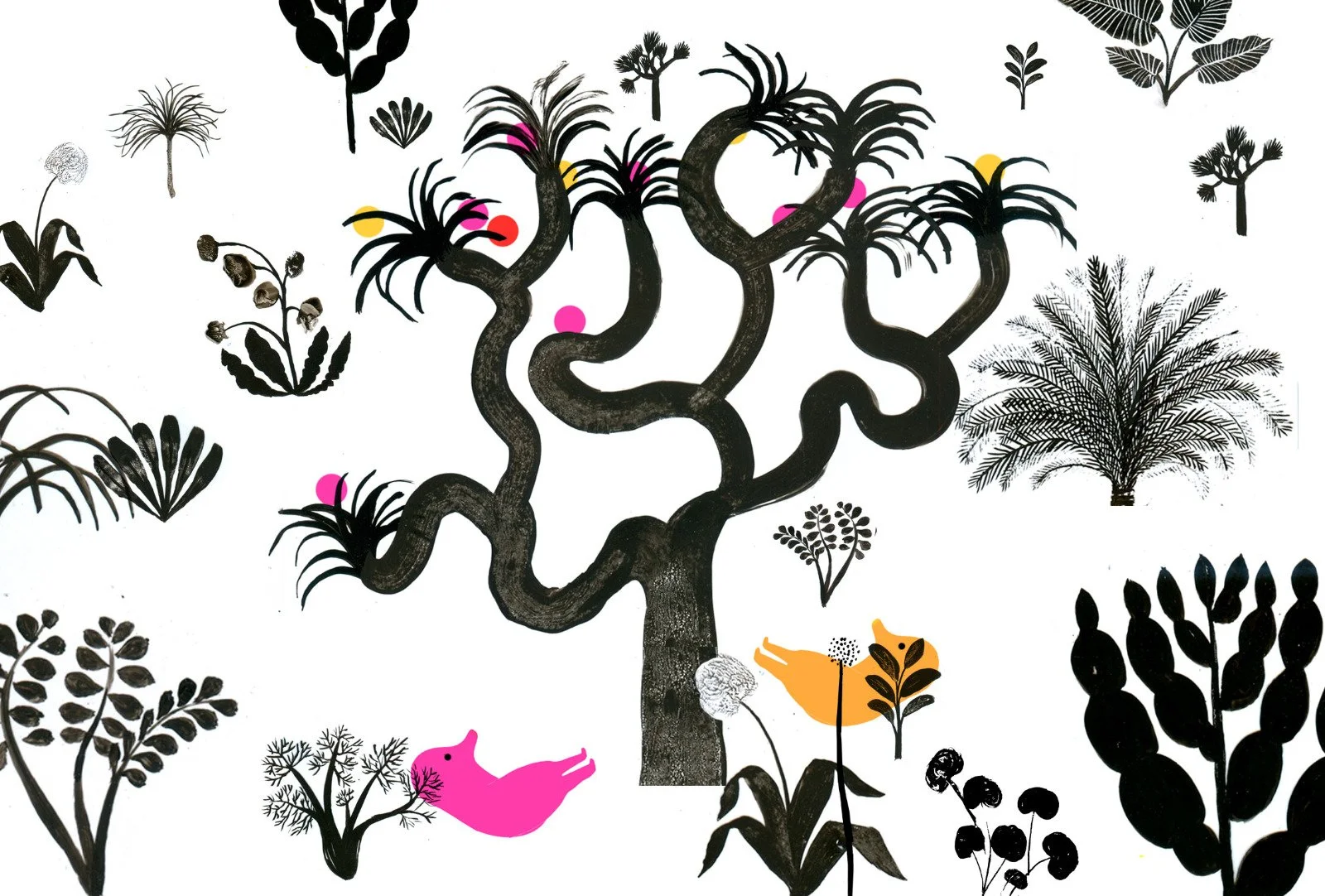
How can creative practices support imagining, birthing and growing futures that decolonize, rebuild and heal, as well as respond to the crises of disenchatment and loss of wonder as "injuries of modernity"? In what ways arts and other creative practices become support structures reconnected to the lived life and offer other ways to perceive multispecies worlds, to engage into affective primordial contact with them, to place value and to act? Residencies hold space for intimate encounters with natural environments, through gestures of attunement, closeness and collective work, bringing together visible and invisible, ecological and metaphysical, poetic and practical, objects of daily use and artworks of symbolic meaning. Residencies unfold as temporary convivial experiences breathing life into a relational space where contemporary work is made collectively, claiming freedom and openness to experiment, making room for critical thinking and sensing, embracing heterogeneity and wanting the impossible. Open to diverse creative practitioners: such as art-, craft-, food-, land- and space- practitioners, and others sharing affection for forests and engaging with multispecies communities of life in their practice.
www.foresta-collective.com/thinking-with-a-garden
Seasonal Academy
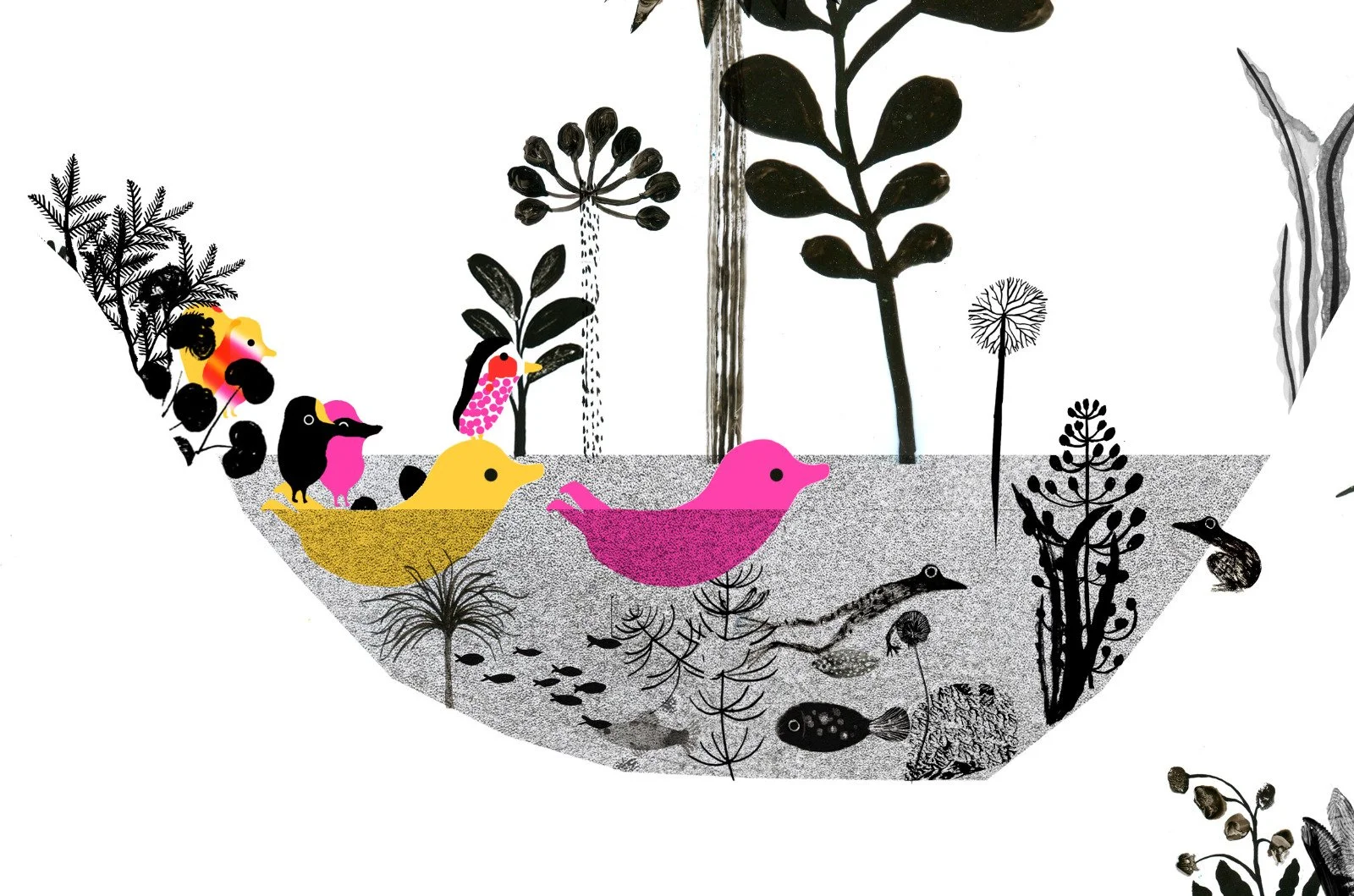
Seasonal Academy is Foresta’s main learning format, that offers online (self-paced) and onsite (in person) learning experiences dedicated to ecologies of human and multispecies vibrancy and restoration of bonding with the living world(s). Committed to supporting persons from diverse walks of life, who wish to strengthen their work or develop an initiative rooted in forest imaginaries, interconnected ecosystemic thinking, attentiveness and care, responsive to each particular context. Seeded within embodied culture, thinking-through-making, and collective practice, Seasonal Academy offers participants space and process to deepen into the circles of ecological sensitivity and develop long-term strategies for envisioning and realising their work, while taking care of themselves and their world(s).
www.foresta-collective.com/seasonal-academy
Multispecies Commons Walk
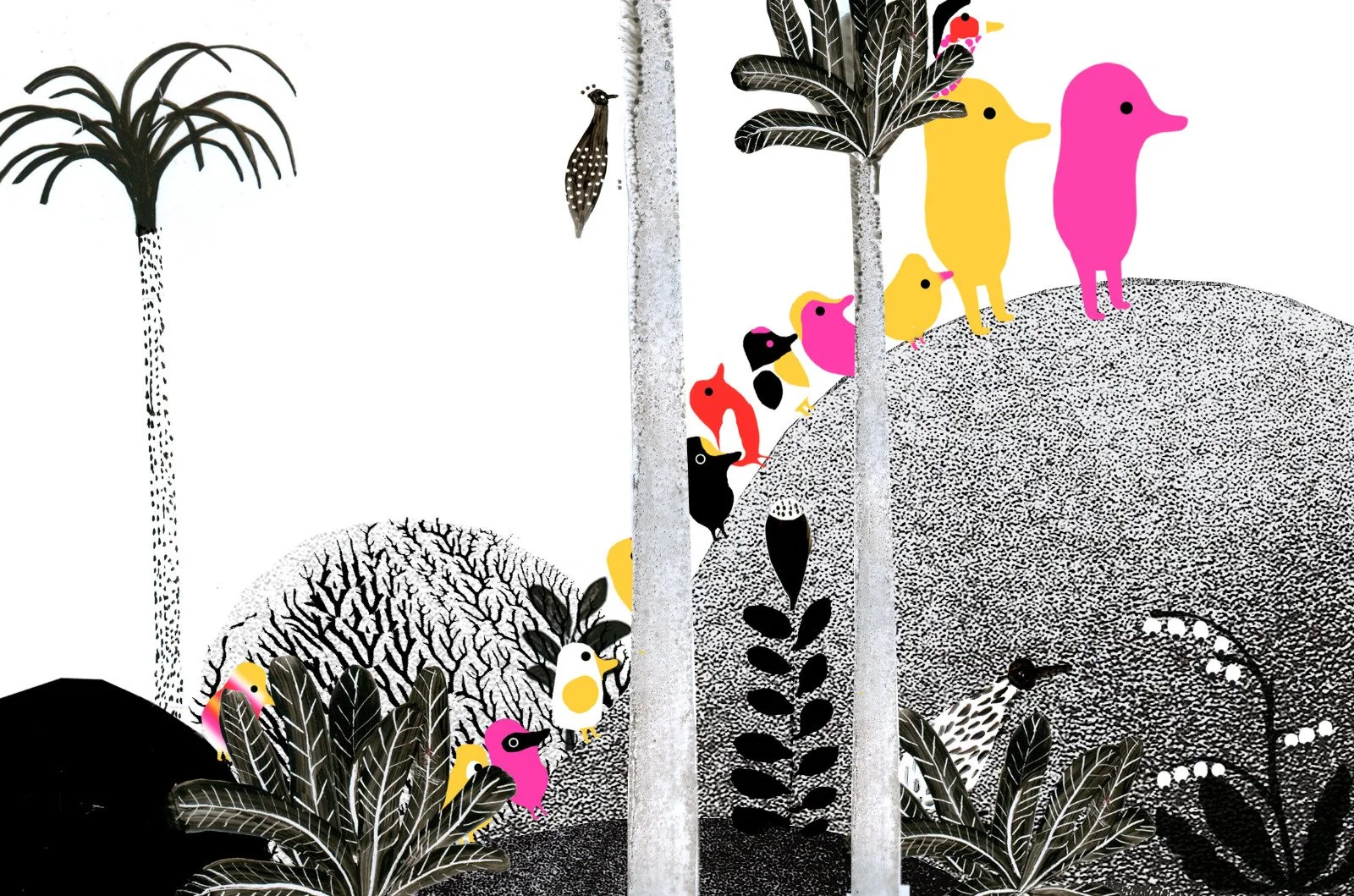
Contemplating ideas, potential meanings and practices for contemporary pilgrimage as a way to engage with personal meaning-making, we are envisioning a public pathway as part of Foresta space, where installations and objects will invite visitors to reconnect with the natural world. This cultural pathway embedded into the landscape and strongly connected with local ecologies, may be a part of the educational and cultural activities at Foresta. Such a walk offers visitors to engage into contemplative journey, connecting to the local landscape and its inhabitants. Communication partners on the walk will also be several site-specific artefacts, artistic objects or micro-architectural structures, that symbolically embody Foresta’s ecological and regenerative philosophy, and support a more playful approach to understanding some of the key ideas and practices we are working with and towards.
www.foresta-collective.com/multispecies-commons-walk
Food production
Food is a conversation — between people and other species, seasons and landscape. Food is a tribute to the passing of time and shifting cycles, to attention and listening, to regeneration and care. Food is a relationship: agricultural, economical, cultural, multispecies. It’s a relationship between arts, crafts and technology — meeting in all the tools we use when planting, harvesting, eating and interacting with ingredients. Food is connection — between those who grow, those who are being grown, those who receive, and those who dispose. It’s a connection between societies economically and culturally, between human generations spoken through stories and ancestral recipes, between those eating together, and last but not least, a connection to one’s own embodied experience within the holobiont living body. Food is an expression of multispecies creativity and Earth’s biodiversity. It’s a path towards renewal of local economies and conviviality of place-based communities. Potentially we see food production as part of the work Foresta Collective will be engaging with, growing and harvesting from a forest garden, experimenting with perennial plants cooking and offering dinners at the food lab, as well as producing tea, infusions, snacks, and other food-forest related products.
www.foresta-collective.com/foodscapes
School without Walls

School without Walls is our long-term format for and with children, dedicated to ecologically, socially and personally sustainable futures, addressing learning as an embodied, affective, relational practice rooted in the territories. It has been existing in an urban setting of Berlin as an aesthetic research expedition that explores natural and cultural ecologies and that will also metamorphosize as Foresta will become more rooted on the land. Unfolding in a direct relationship with the world around, this School’s vision is to nurture perception and awareness beyond a reductionist view of nature, to expand sensitivity and ways of listening to multispecies communities of life, through personal and collective storytelling and artistic thinking and making.
www.foresta-collective.com/workshops-foresta-kids
Eco-tourism
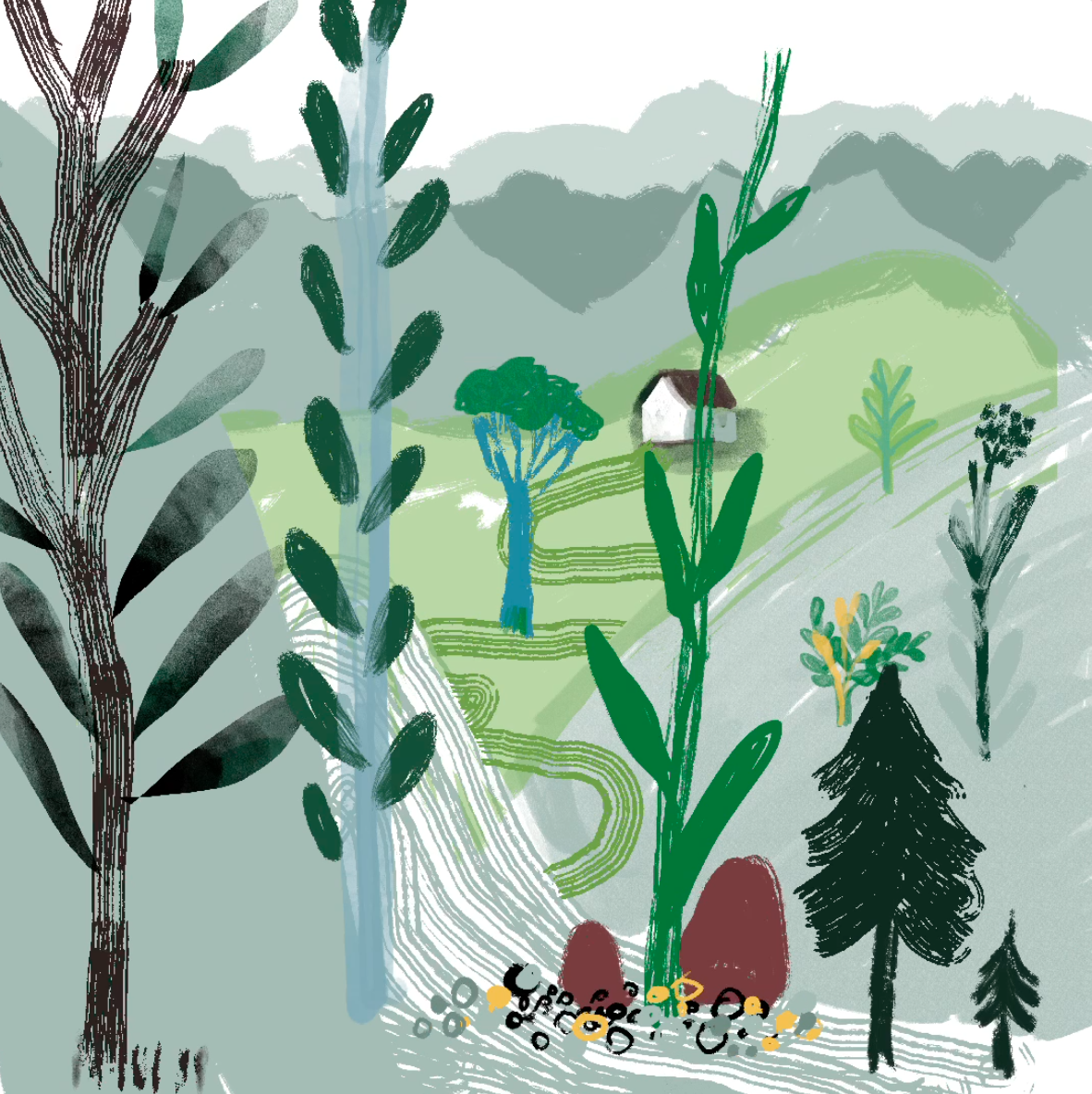
We understand eco-tourism as a way to invite temporary dwellers into the project, to offer a possibility to experience it not just during a day visit, but potentially staying for a while, as a way to travel slower and get to know the place closer. We are still in the process of research and experimentation with the questions of form that this hospitality-related activity may take. How can structures have least possible impact on the terrain? Can they welcome interspecies living spaces, while respecting privacy of all at the same time? This possibility to engage with the place is also a way to contribute to the economy of the project and its long-term sustainability.
Something else?
A sanctuary, a festival, a summer school, a refuge,… what would you like to do?
Structure
The association is organized through non-hierarchical and participatory structures, grounded in a shared commitment to ethics of care. Decisions are developed collectively through open dialogue, transparency, and mutual accountability. It embraces self-organization, collective authorship, and shared responsibility, allowing forms of collaboration to remain responsive, situated, and evolving.
Circles and domains of work
The work of the association is organized through circles, each corresponding to a domain of practice. Circles operate with a high degree of autonomy, while remaining aligned with a shared epistemic frame.
This structure allows approaches and methodologies to stay open, adaptive, and context-sensitive, while ensuring coherence across the whole.
Current domains may include (to be defined or adjusted with the members):
Architecture(s) of Connection
Agroforestry & Foodscapes
Learning-in-Reciprocity
Artistic Practices
In addition, the association welcomes:
Invited project-based contributors
Visitors and participants in its various formats (residencies, gatherings, learning situations, public programs)
Participation at this level is time-bound and contextual. It may take the form of contribution without membership, or of temporary membership within clearly defined frames, depending on the nature of the engagement.
Governance
Core stewardship
A small group of Founding Stewards holds responsibility for the long-term continuity, coherence, and integrity of the association. Their role is to steward the founding intention, ethical commitments, and overall direction, ensuring that activities remain aligned with the association’s purpose.
Executive Board
The elected Board supports the association by holding legal responsibility and offering strategic orientation and oversight. It acts as a stabilizing and reflective body, ensuring that the association operates responsibly, transparently, and in accordance with its statutes, while respecting the autonomy of the circles and the role of core stewardship.
Advisory board
An advisory board brings in trusted external perspectives, experience, and critical companionship. Its role is consultative rather than decision-making, offering guidance, feedback, and long-term perspective when invited, and supporting the association’s learning and evolution without exercising governance power.
Pathways of Participation
People who feel resonance with this work and wish to contribute to its becoming are invited to become members of Foresta Collective association. There is no single way to participate. Members may:
contribute time, skills, or knowledge
take part in residencies, gatherings, or research processes
support the association’s stewardship work
help hold and evolve its values and governance
Members do not need to live in situ, unless this is something they may choose to do. We work through seasonal gatherings, remote coordination, and project-based visits. What matters is a commitment to attentiveness, responsibility, and care for shared vision.
Where we are coming from
Between 2015 and 2022, based in Berlin, Foresta Collective understood ourselves as an urban trans-disciplinary collective working at the intersection of ecologies, arts and education, with an intention to research the multifaceted notions of the 'ecological' and reframe how we relate to multispecies communities of life. Our activities revolved around the following areas (you can find more details to each available on this website):

Forestamorphosis
In 2022 we have set on a search for ‘spaces of the possible’, looking for ways to land with Foresta in a wilder place, to initiate the process of bringing critical reflection, research and symbolic practices of the past years closer to our lived life, to the everyday, to life-generating processes with the land, embracing the question at our origins — “how do we want to live as a multispecies collective?” — in very direct non-abstract materially-engaged ways, where all flourishing may be mutual, where our work can be shaped in, by and with places that lie outside current human-techno-urban imaginations.
Time of a long search and Forestamorphosis began......𓆱⚘𓃦𓍊𓋼𓍊𓅫↟𖤣𖥧𓆑....
In 2024 we became guardians of a 3 ha piece of land in Asturias, northern Spain, with an intention to co-create a place for regenerative culture(s) and multispecies care, and to hold space for Foresta to grow as a real forest. In 2024/2025 we began planting the first couple of thousands of trees, made paths and terraces, tried to co-facilitate processes for soil regeneration, hosted first several residencies, and built the first structure, an agropoetic pavilion, a vessel for the future unfolding processes. That’s when we meet and potentially continue together :)

All illustrations and photograph by the association’s founding members Violeta Lopiz and Sabina Téari respectively